


The age of maxxing has a hidden cost
We’re letting efficiency crowd out the things we claim matter most.
Originally published in print and online by The Straits Times on 9th August 2026
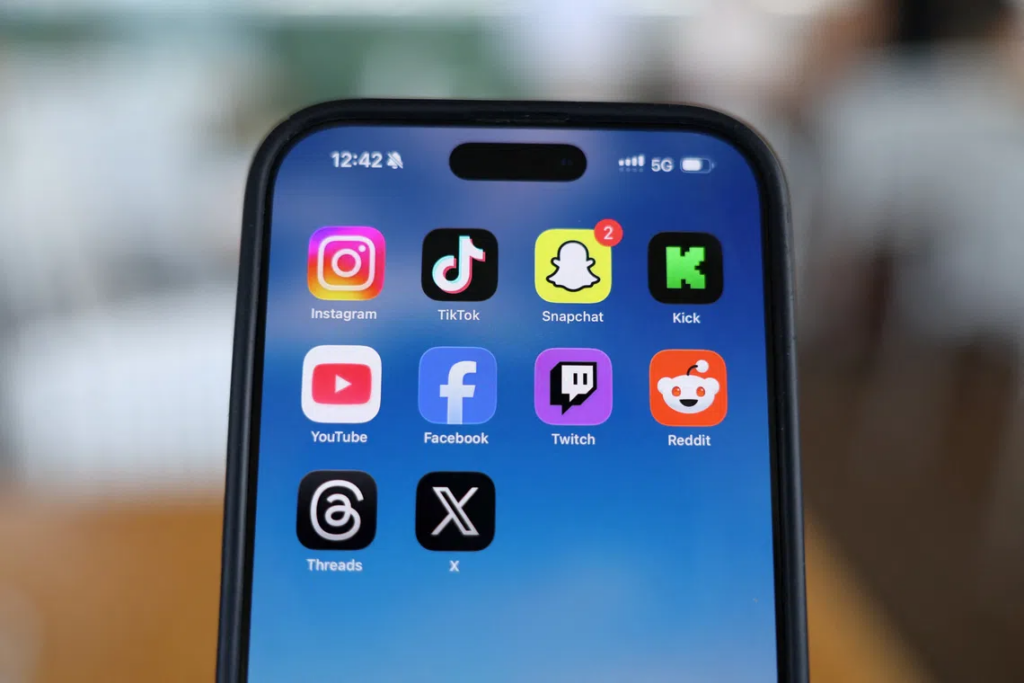
I was scrolling through TikTok when I came across someone’s morning routine. In under 30 seconds, they’d peeled off their mouth tape, downed electrolytes, sat through a red-light therapy session, journalled, blended a protein shake and climbed into an ice bath.
By the time the video ended, it felt like they had accomplished more before sunrise than I had all week.
Every generation inherits its own defining anxiety. For our parents, it was stability. Secure jobs, home ownership and financial security were the milestones that shaped adulthood.
For mine, it may be optimisation.
The internet even has a name for this mindset: “maxxing” (from the word maximise). Looksmaxxing. Sleepmaxxing. Healthmaxxing. Careermaxxing. Spend a few minutes on TikTok and you start to feel the pressure: build muscle a little faster, learn artificial intelligence before it becomes obsolete, fine-tune the morning routine, find the productivity system that finally sticks, read more in less time, eat better, sleep better, perform better.
Now imagine that as something you’re exposed to every day, where improvement isn’t occasional advice, but the baseline expectation.
It would be easy to dismiss it as another internet trend. Yet “maxxing” feels stickier than that. It has quietly become a way of thinking, shaping our habits and what we believe a good life should look like.
But in this chase to optimise, there is a widening gap between what we say we value and how we’ve designed our lives.
Take an Ikea survey in 2024 which noted that Singaporeans are among the most likely in the world to say they prefer home-cooked food, yet an earlier survey found that only 22 per cent of households cook at home almost every day.
The same contradiction appears elsewhere. Nearly half of Singaporeans listed spending more time with family and friends as one of their priorities for 2025, according to a recent YouGov survey. Yet many of us have accepted a world where dinner with friends needs to be planned weeks in advance, while replying to Slack messages late into the evening barely feels worth mentioning.
We’ve built lives where productivity is easier to prioritise than presence.
Why the obsession with improvement?
Many of today’s Gen Z young adults came of age in a period that has felt unusually unstable. A pandemic that interrupted study and early work. An AI wave that is already reshaping the kinds of entry-level jobs people were told would be safe. Careers feel less like ladders now and more like moving walkways that occasionally reverse direction.
And in that kind of environment, optimisation starts to feel less like vanity and more like adaptation. When the future is uncertain, improving yourself feels like the one variable you can still “control”.
It’s no longer about whether something feels meaningful or enjoyable. We start looking for the fastest way to learn, the smartest routine to follow and the most productive way to unwind. At some point, even rest becomes another thing to improve.
As a self-confessed Type A personality, I rarely leave an interest alone for long. If I pick up a new hobby, I find myself asking whether it could become content or a side hustle.
Busyness has gone through its own rebranding. In Singapore, “I’ve been so busy” isn’t always a complaint. Sometimes it’s reassurance. It signals that work is going well, opportunities are coming in and life is moving in the right direction.
When every part of life starts looking like an opportunity, “enough” becomes surprisingly difficult to recognise. There’s always another skill to learn, another certification to earn or another version of yourself to work towards. Efficiency stops being a tool and quietly becomes the goal itself.
The danger isn’t that my generation no longer values friendship, creativity or simply being present. It’s that optimisation quietly changes what earns our attention.
The productivity paradox
If optimisation is the mindset, technology has become its greatest enabler.
After all, every new technology promises to give us something we all say we don’t have enough of: time. AI drafts e-mails, summarises meetings and condenses hours of reading into a few bullet points. Groceries arrive within the hour. Dinner appears at the door.
In theory, all of this should create more space for the relationships, hobbies and slower experiences we claim to value. Instead, it creates new expectations to do even more.
Long before ChatGPT, sociologist Richard Sennett warned that societies obsessed with speed and flexibility slowly erode the qualities that take the longest to build: patience, craftsmanship, commitment and even a stable sense of self.
Nobody praises a home-cooked meal because it’s efficient. They remember who taught them the recipe, the conversation while vegetables were being chopped, or the satisfaction of making something with their own hands. Those are exactly the kinds of experiences that optimisation struggles to measure, even though they’re often the ones we remember most.
We still desire these experiences even as our daily routines leave less and less room for them. The same is true of reading a novel instead of a summary, learning an instrument without wondering whether it could become a side hustle, or spending an afternoon with a friend without instinctively reaching for your phone.
And that’s the paradox. We built these tools to give ourselves more time for what matters, yet they often make it harder to choose exactly those things. The challenge was never that we lacked time. It was that we’ve come to believe every spare moment should be put to work.
The opportunity cost of convenience
Economists use the phrase “opportunity cost” to describe what we give up when we choose one option over another. We instinctively understand the cost of spending an hour cooking instead of working late, or taking a long walk instead of clearing our inbox.
What we spend far less time thinking about is the opportunity cost of convenience itself.
Convenience almost always feels like progress because it removes friction from everyday life. But some forms of friction are still necessary.
Take learning. AI can summarise books, explain difficult concepts in seconds and tell us exactly what we need to know. It’s undeniably useful, but learning has never been just about arriving at the answer as quickly as possible. It’s the detours, the moments of confusion and the chapter that seems irrelevant until it suddenly isn’t that deepen our understanding.
Perhaps the clearest shift, though, is in how we think about hobbies and relationships.
A generation ago, photography could simply be photography. Today, it is also potential content. Reading becomes a race to hit 100 books a year or a Goodreads target. Even hobbies are increasingly expected to justify themselves.
The same goes for our relationships. Platforms like LinkedIn have democratised networking and opened doors that once depended on who you knew.
None of this is an argument against ambition, AI or convenience. My generation – in our early to mid-20s – has good reasons for wanting to stay employable in an economy that changes this quickly.
That’s the contradiction at the heart of the age of maxxing – we say we still value creativity, deep friendships, craftsmanship and community. We just keep building lives that make those things harder to practise.
